Not long ago, the outcome of a design process was a static object — a poster, a book, a screen. Today we design interactions: things that have a behavior. This shift is the starting point of Prototyping Interfaces.
The book “Prototyping Interfaces – Kreatives Skizzieren mit vvvv” guides readers through the fundamentals of vvvv, Arduino, tracking techniques, and display technologies, using practical examples that invite experimentation. Through this structured approach, the book allows learners to build hands-on skills and gain fluency in translating abstract concepts into interactive prototypes.




Why vvvv and Arduino?
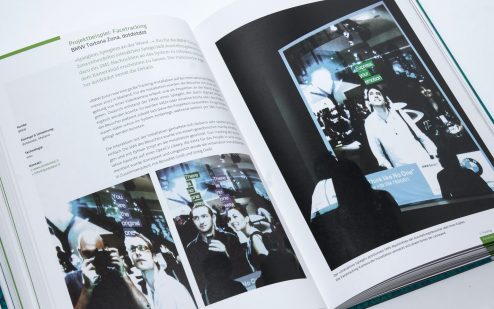
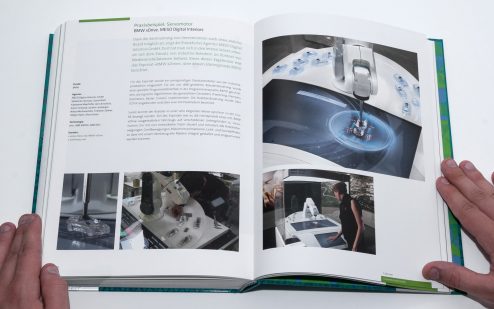
Both tools were powerful enough for real, complex prototypes — sensors, tracking, physical interfaces — yet approachable for designers without deep programming backgrounds. The book introduced designers to vvvv, Arduino, modern tracking methods like Xbox Kinect, and display technologies through 17 practical tutorials, 5 interviews, and 16 project examples.
Zu diesem Buch muss man nicht viel sagen... wer sich für vvvv interessiert, ist dies das zurzeit beste deutschsprachige Buch für den Einstieg in vvvv.
Chapter 1: Relevance
Six interviews with leading studios — including ART+COM, Intuity Media Lab, and informative — explore how interactive sketches function as thinking tools in real design practice. The chapter defines what an “interactive sketch” is and why prototyping changes the quality of design decisions.
Chapter 2: Basics in vvvv & Arduino
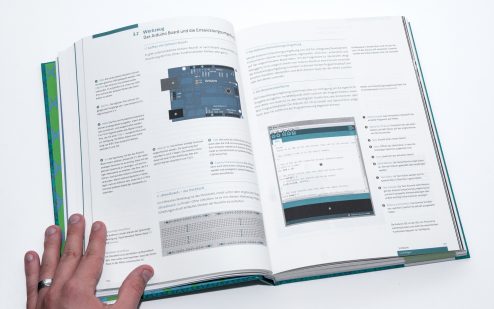
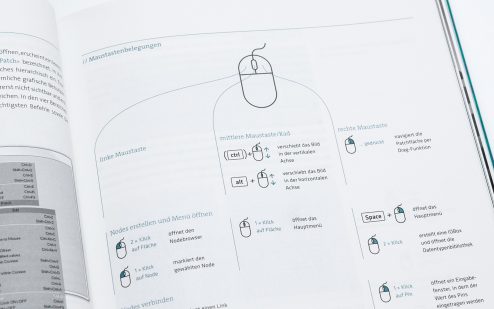
Two extensive chapters introduce vvvv as a visual programming environment — covering node manipulation, rendering, animation, and 3D space — followed by a complete Arduino introduction: from first code to standalone interfaces, serial communication, and the Arduino–vvvv bridge via Firmata.
Chapter 3: Application Examples
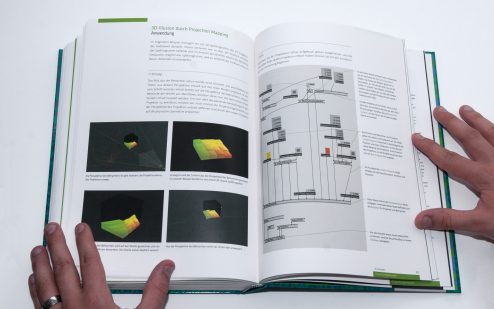
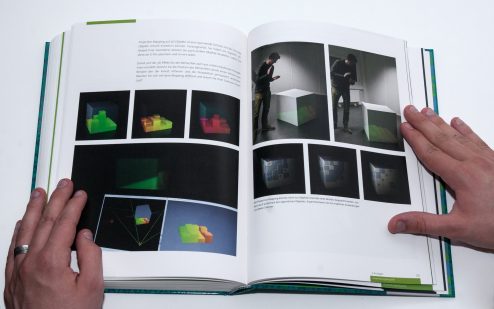
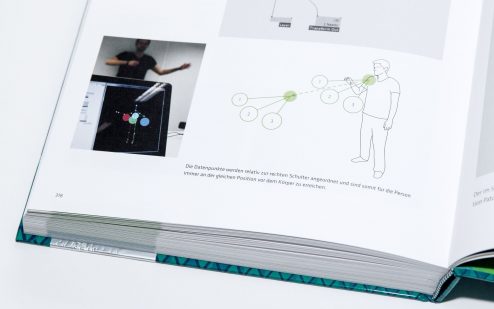
Four hands-on chapters cover the full spectrum of physical prototyping: Sensors (RFID, temperature, acceleration), Tracking (face tracking, multitouch, augmented reality, gesture control), Displays (multiscreen, 2D/3D projection mapping), and Actuators (servo and vibration motors).
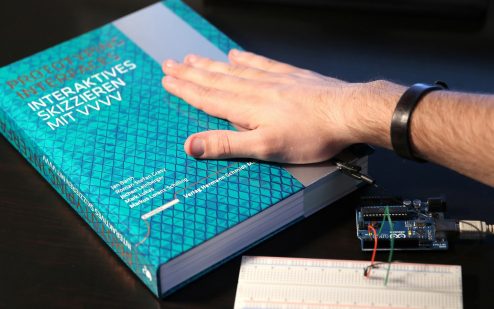
The Cover itself is a prototype!
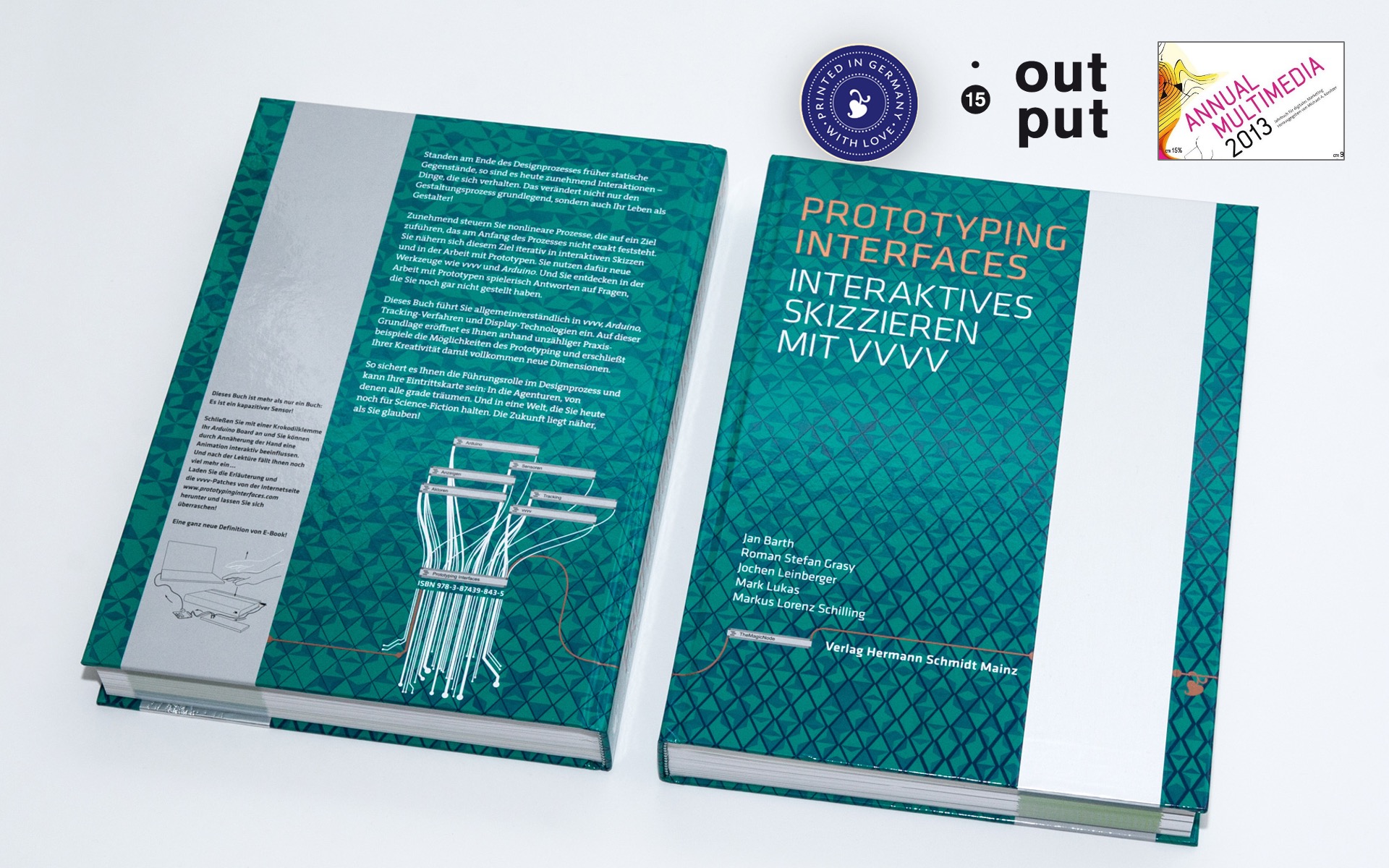
The cover features an embedded capacitive sensor — connect it to a computer with a crocodile clip, and the proximity of your hand controls an interactive animation. The closer your hand, the larger the value that opens the virtual book. The medium embodies the message.


Development Process & Roles
The book was developed together with co-authors Jan Barth, Roman Stefan Grasy, Jochen Leinberger and Markus Lorenz Schilling — combining expertise across interaction design, physical computing, and design education.
Concept & Structure
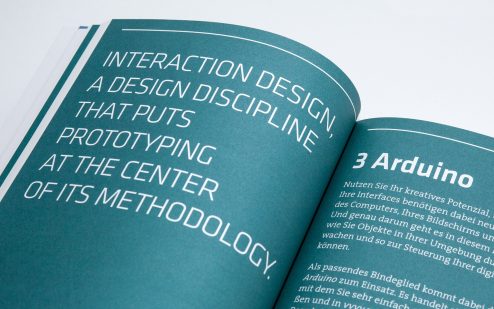
The book is divided into two parts: a theoretical section defining what an “interactive sketch” is and why it matters – and a practical section teaching vvvv fundamentals and hardware control with Arduino. I contributed to defining this two-part structure and ensured a consistent design perspective throughout.
Content & Chapters
Each author owned specific chapters. I authored chapters independently, contributing both theoretical framing and hands-on tutorials — always with the goal of making complex technology genuinely accessible to designers.
Visual Concept & Layout
I was responsible for the visual concept and complete layout of the book, printed on three different papers with a hardcover featuring embossing. The design treated the book as a design artifact — the capacitive sensor cover being the clearest expression of that vision.
Publishing & Printing
My responsibility was to manage the relationship with Verlag Hermann Schmidt Mainz, overseeing the full production process from manuscript to finished book.
My Role & Responsibilities
I was one of five co-authors, with specific ownership across concept, content, visual design, and publishing.
Concept & Content:
- Co-developed the editorial concept and two-part book structure
- Authored specific chapters — theoretical framing and practical tutorials
- Maintained a consistent design perspective across five authors
Visual Concept & Layout:
- Responsible for the complete visual concept and layout of 336 pages
- Designed the book as a design artifact — including the interactive capacitive sensor cover
- Managed three-paper print concept and hardcover production details
Workshop Development & Teaching:
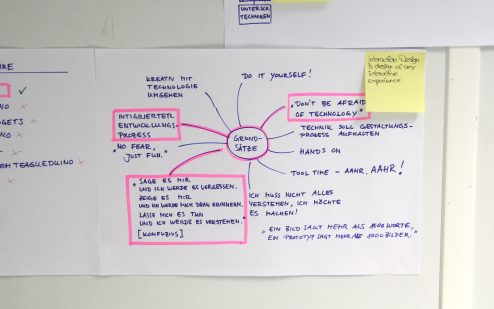
- Developed vvvv workshop curricula from the book’s methodology
- Delivered workshops at TYPO Berlin, NODE Festival Frankfurt, HfG Schwäbisch Gmünd, ThinkMoto, Retune Conference, and Nolte & Lauth GmbH
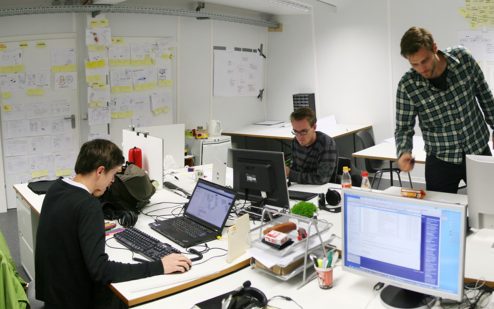
- Taught designers with no prior programming experience to build functional interactive prototypes




Impact
- Annual Multimedia Award 2013 — published in the Annual Multimedia Award Yearbook
- Output Award 2012 — winner at the Output design conference
- Innovationspreis 2013 — honored as Achiever for innovation in design education
- Officially published by Verlag Hermann Schmidt Mainz
- Exhibited at Leipzig Book Fair 2012 and See Conference #7
- Published in Weave Magazine and FORMAT Magazine #9
- Talks at NODE Festival 2013, TYPO Berlin 2014, ThinkMoto, HfG Schwäbisch Gmünd
- Selected at IIID Award — The Future Book
- International press coverage including CDM, Adafruit, and vvvv community