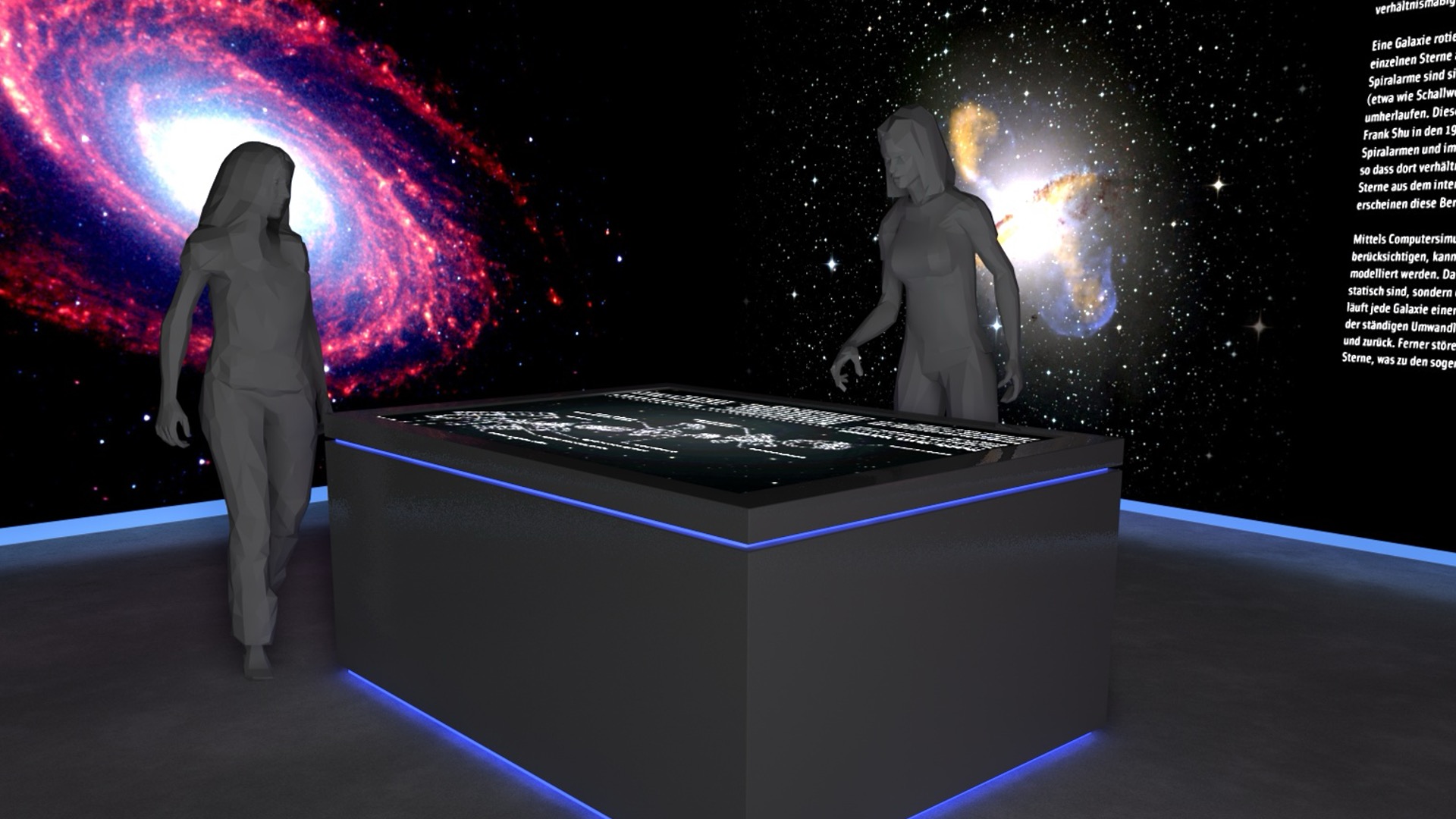
The Galaxy Table was a concept for an interactive multitouch installation about galaxies and space, which has been developed as a table-based application during an exchange semester at FH Joanneum Graz.
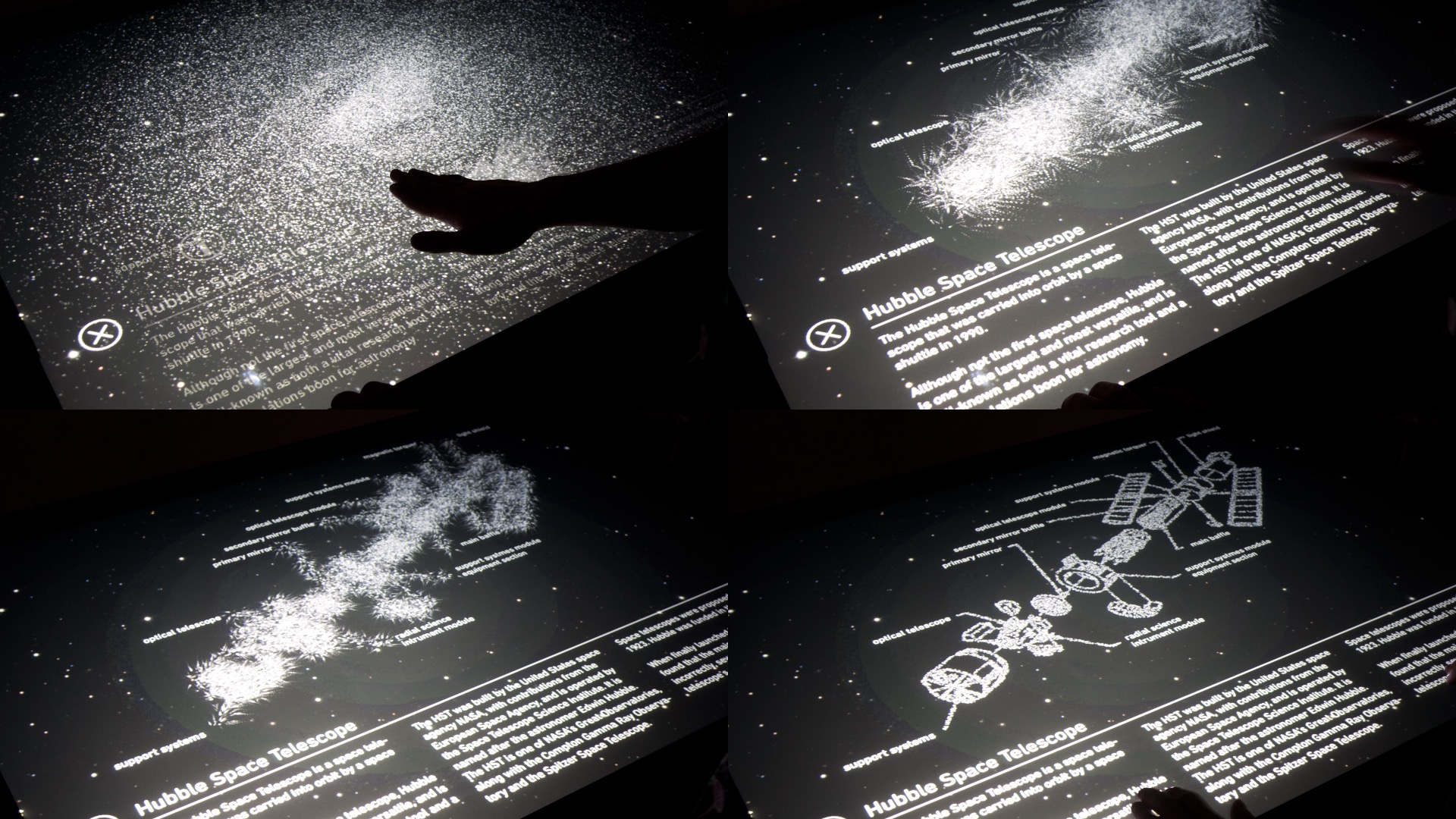
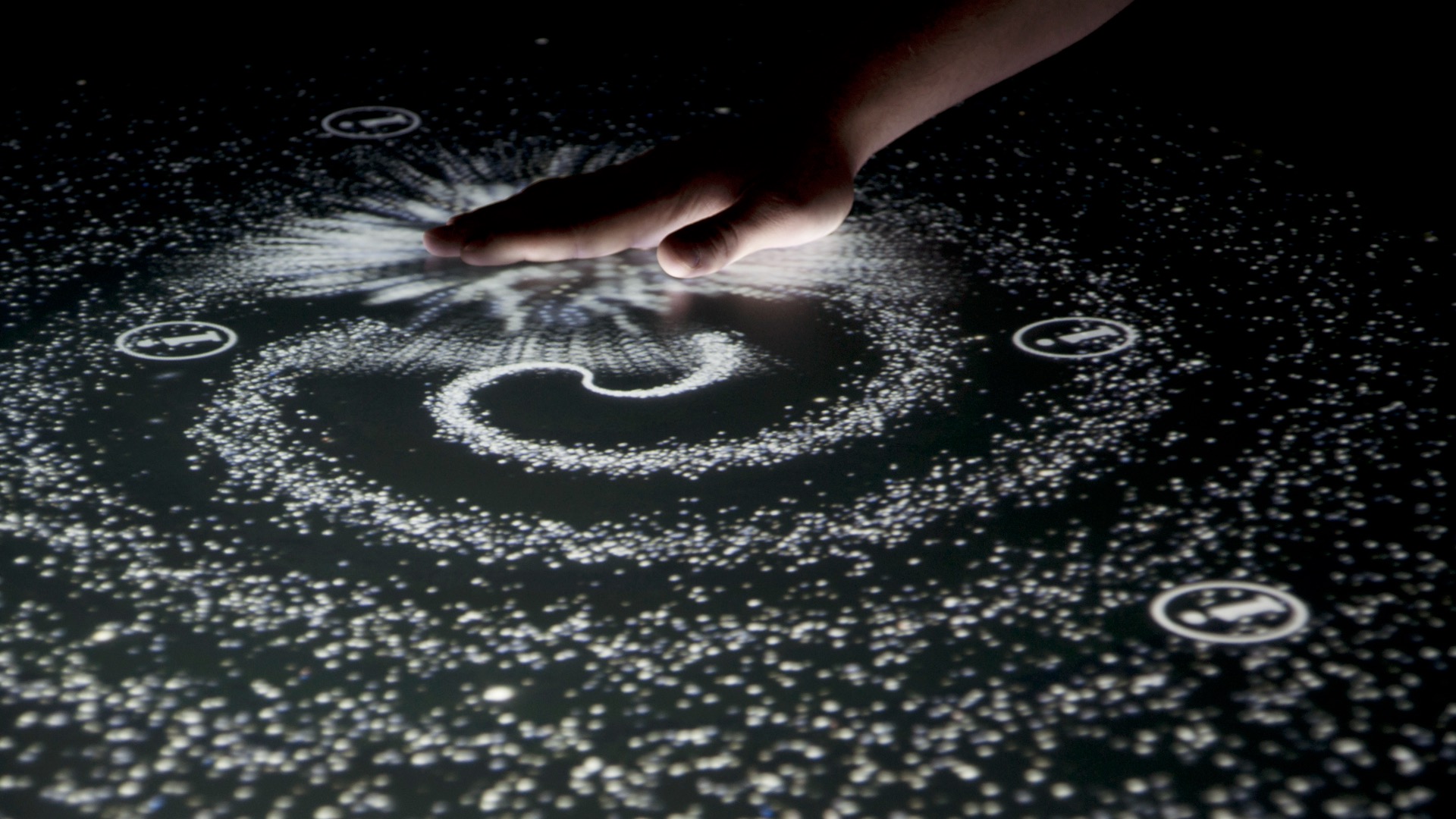
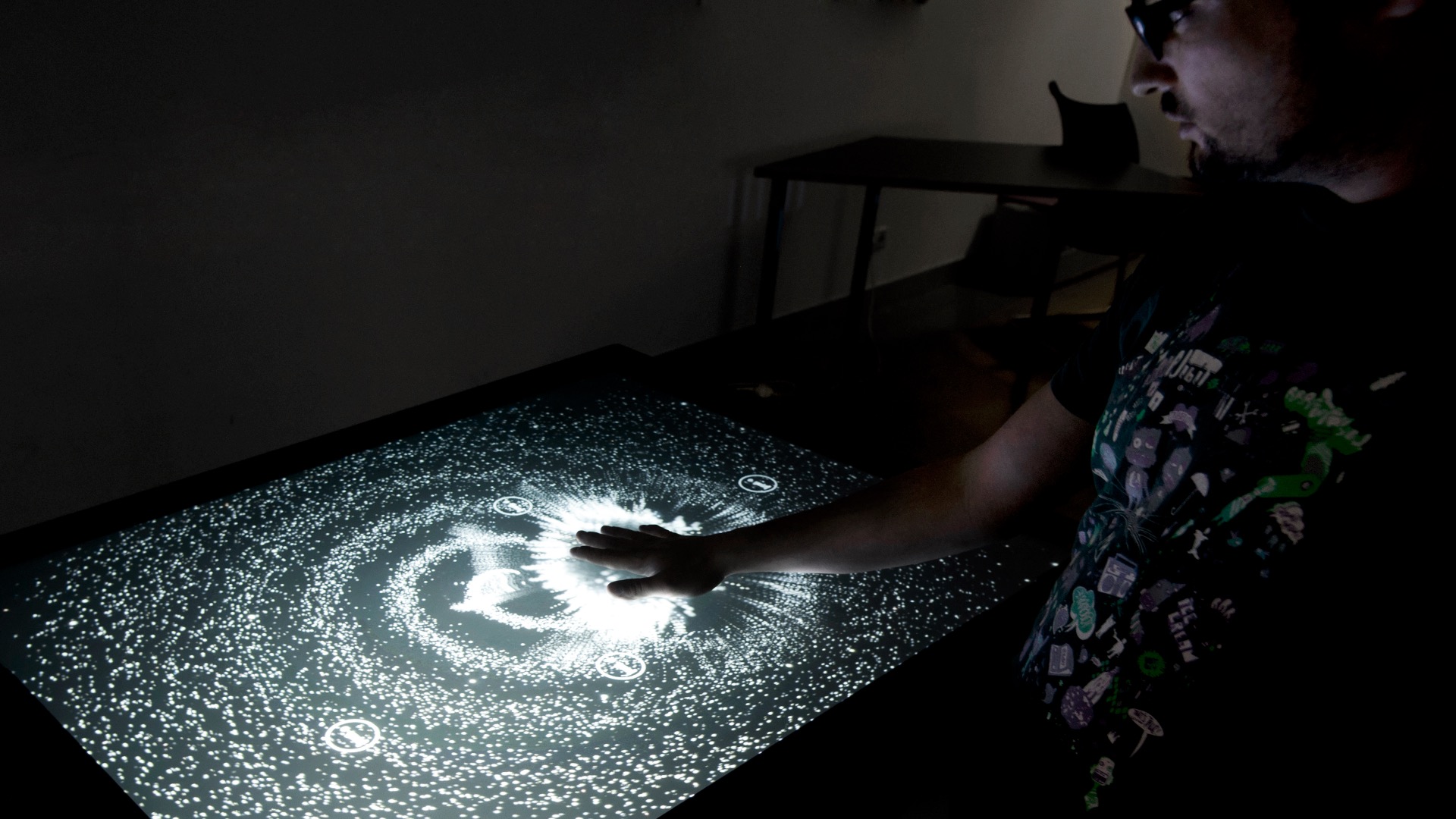
A slowly rotating spiral of thousands of particles forms the Milky Way. Users interact with it directly by touching the surface or simply moving their hand above it. Stars respond to proximity, swirl away from the hand, and reassemble into diagrams, maps, and information about space. No instruction needed. The interaction teaches itself.
The core design decision: Using infrared sensing (Playstation2 Camera) rather than touch-only input meaning the entire particle system reacts to the presence and distance of a hand, without any physical contact required. This created an interaction that felt less like using software and more like disturbing a physical system.
My Role
Concept & Interaction Design
- Developed the core concept including the particle-based information visualization triggered by proximity interaction
- Designed the infrared-based interaction model as the hand distance as the primary input method
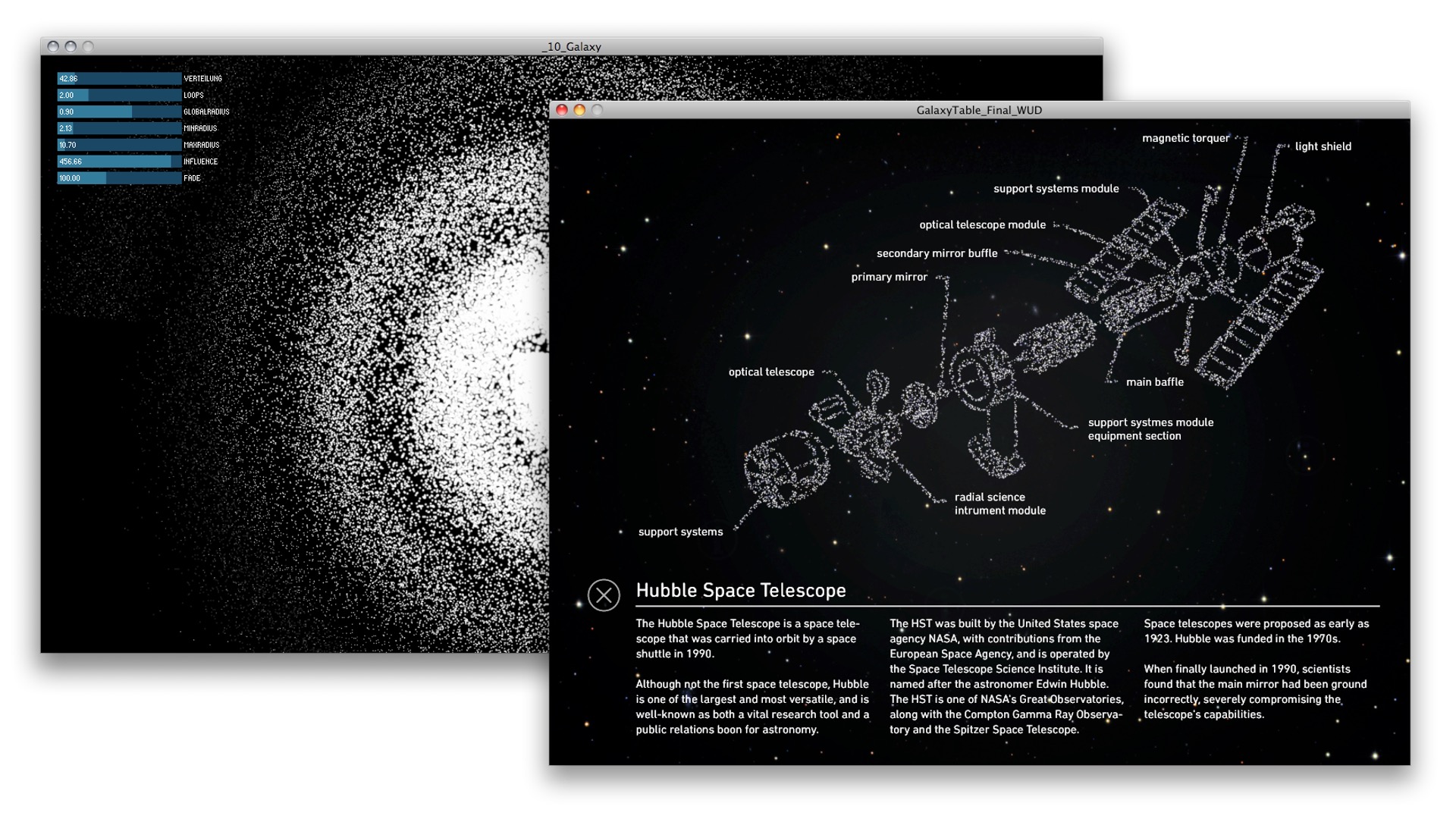
- Defined the information architecture on how astronomical content (galactic core, spiral arms, Hubble Space Telescope) unfolds through particle animation
- Visual concept and spatial layout of the installation
Programming and technical implementation by Stefan Kuzaj using Processing.


Impact
- Exhibited at World Usability Day 2011, Mannheim
- Selected work at IIID Award — The Future Book — international recognition for innovative information design
- Published in Weave Magazine 04/10